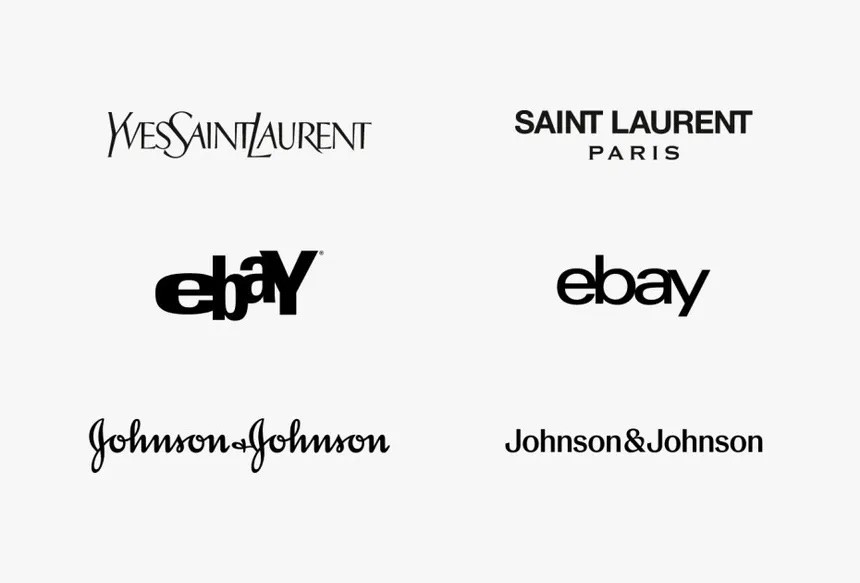
Most brands don’t need a rebrand to feel alive again
Every few months, someone posts a concept rebrand on Dribble or LinkedIn, and the comments fill up with the same argument: the brand has gone flat.
Recently, I saw a concept rebrand for McDonald’s. The pitch was to not tweak or modernize, but to make a full move towards reinvention. Keep the core (the arches and the colors), but evolve everything else.
Everything around the arches feels like it was made by a holding company. Burger King gets cited as the counter-example. So does MailChimp before the Intuit acquisition. So does Liquid Death, every single time.
The implicit prescription is always the same. Bring back warmth. Bring back illustration. Bring back motion. Bring back personality. Pull the whole system out of the polite, sanded-down register that almost every large brand has drifted into over the last decade and let it feel like something a person made.
I think the diagnosis is right. I think the prescription is wrong.
Vibrancy isn’t a visual property, even though it shows up visually. It’s an organizational outcome. The brands we point to as alive aren’t alive because someone picked better fonts. They’re alive because someone, somewhere inside the company, has the authority to ship something a little bit weird without it dying in a Slack thread of nine stakeholders.
Most brands don’t have that person anymore. And no rebrand fixes that.
So when a brand says it wants to feel more vibrant, the honest question isn’t what should it look like. The honest question is what would the company actually have to give up.
Because the things that produce vibrancy are mostly the things that brand teams spent the last decade building elaborate systems to prevent.
It’s worth being clear about what we’re nostalgic for, because I don’t think it’s the early-2000s aesthetic itself. Old MTV identity systems, WordArt, Apple’s Think Different era, early Method packaging… None of that holds up if you ship it tomorrow.
The thing we miss isn’t the look. It’s the feeling that a brand had a hand on the wheel. Someone was making decisions. Some of those decisions were going to be wrong. That was fine. The cost of being a little wrong was lower than the cost of being completely forgettable, and brands acted accordingly.
Now the math has flipped. Being a little wrong is a quote-tweet away from being a crisis. Being forgettable is invisible by definition, which makes it feel safe. So brands optimize for safety, and over time, the optimization compounds.
The brand book gets longer. The approval chain gets deeper. The voice guidelines start including the phrase “approachable but authoritative.” The illustration system gets a 40-page usage manual. Eventually you have a brand that can’t make a mistake because it can’t make a decision.
This is the part of the conversation where the rebrand gets proposed. And to be fair, sometimes a rebrand is the answer. But more often it’s the most expensive way to avoid the actual problem.
You can change every visual asset in the system and still ship the same beige work, because the people approving the work haven’t changed and the conditions they’re working under haven’t changed.
The new design language gets metabolized into the old organizational reflexes within about six months. The brand looks slightly different. It feels exactly the same.
The theater moves
There’s a category of changes that look like they’re producing vibrancy but aren’t. They’re the moves a brand makes when it wants to feel like it’s loosening up without actually loosening anything.
Refreshed illustration systems are the most common one. Illustration is the easiest thing in a brand to approve, because it’s decorative; it doesn’t change the product, it doesn’t change the voice, it doesn’t change what the company says or does.
So it’s where energy goes when energy has nowhere else to go. The result is a lot of very nice character illustrations sitting on top of marketing copy that still reads like it was written by a committee, which it was.
A custom wordmark with one quirky letter is another. The crossbar of the A becomes a little smile. The dot of the i becomes a sparkle. The brand sends out a Medium post about how the new mark balances heritage and forward motion. None of the actual brand expression downstream of the mark changes at all.
Adding a secondary palette the brand never uses. Building a motion system that only shows up in the case study reel. Expanding the brand world with a deck full of patterns and textures that never make it past the launch campaign. A new tone-of-voice document that names five adjectives, three of which are “playful.”
These are real things that get shipped, and they consume real budget, and they almost never produce what they’re supposed to produce, because they’re aimed at the wrong layer.
I’m not saying any of this work is bad. Some of it is excellent. The problem isn’t quality. The problem is that this work gets sold internally as the answer to “how do we feel alive again,” and it doesn’t answer that question, because it isn’t a design question.
The moves that actually work
What does work, in my experience, is almost embarrassingly unglamorous. None of it makes for a good case study video. Most of it is invisible from the outside.
The first move is letting whoever runs the brand’s social presence write like a person. A named editor who has the trust of leadership and doesn’t have to pass every post through legal and brand and comms.
Most brands have a social voice that sounds like a brand because four people have to sign off on every line. The brands we think of as having personality online almost always have one person, sometimes two, who are allowed to just write.
The second move is killing the brand voice document and replacing it with examples. Voice documents are written for a reader who doesn’t exist. They list adjectives — confident, witty, warm, human — that every brand lists.
They’re read once during onboarding and then never opened again. What actually works is a small set of real artifacts: three pieces of writing the brand stands behind, three it has rejected, and a one-line note about why.
New writers learn voice from examples, the same way everyone learns how to write anything.
The third is shipping things that aren’t in the brand guidelines and seeing what happens. Most brand systems are designed to make the guidelines unbreakable, which guarantees the brand will never produce anything beyond what was anticipated when the guidelines were written.
The teams I’ve seen produce work that feels alive treat the guidelines as a starting position, not a fence. They run small experiments outside the system, see how they land, and either fold them back in or kill them. The system gets to grow.
The fourth is harder, because it’s organizational rather than creative. It’s giving one person final say on tone. Voice by committee always converges on the same thing: the safest available version.
One person making the call won’t get every decision right, but they’ll get the brand somewhere specific, and somewhere specific is what we mean when we say a brand has a voice.
The teams that do this well usually have a creative director or a head of brand who’s been there long enough to be trusted with the keys, and a CEO who’s willing to lose a few arguments.
And the fifth, which is really the precondition for the other four: cutting the approval chain. Every additional reviewer in a brand decision lowers the ceiling on how interesting the output can be, because every reviewer has a different downside they’re trying to avoid, and the only work that survives all of them is work that has no downside, which is also work that has no upside.
The brands that have personality have figured out how to make fewer people responsible for any given decision. Not no people. Fewer.
None of this requires a rebrand. Most of it doesn’t even require a designer. It’s editorial and organizational work, mostly invisible, mostly about who gets to decide things and how fast. Which is exactly why it’s hard. It asks the company to give up something it has spent years accumulating: control.
The honest middle
So is there a middle ground between a full rebrand and the theater moves? Yes. But it’s not the one most brand teams are hoping for.
The middle ground isn’t a half-rebrand. It isn’t a refresh. It’s a recommitment, on the company’s part, to actually deciding things again. To picking a register, picking a person to defend it, and accepting that some decisions will be wrong and the cost of being wrong is lower than the cost of being beige.
The visual work follows from that. Sometimes the visual work even ends up looking similar to what was there before, which is fine, because the visual work was rarely the problem.
If a brand can’t do the organizational work, the visual work won’t save it. That’s the part the rebrand concept posts always miss. You can swap the renders for warmth, the gradients for hand-drawn texture, the grids for asymmetry, and within a year the brand will look exactly like every other warmed-up brand on the shelf, because the same nine stakeholders are still in the room and they will sand the new system down to fit them.
The brands that came back to life didn’t get there by being braver designers. They got there by being braver companies. Someone inside the building decided the cost of being forgettable was higher than the cost of being a little embarrassing, and ran the brand on that math for long enough that the work started to look like it.
That’s the choice. Not what should the brand look like. What is the company actually willing to defend, and who gets to defend it. Until that question gets answered, no amount of vibrancy is going to stick, because vibrancy is what’s left when a brand stops over-defending itself. It’s not a style. It’s a side effect.
And the brands that figure this out tend to look, in the end, less like they got rebranded, and more like they remembered they were allowed to have a point of view.
More Articles
A collection of recent articles spanning brand strategy and positioning, brand design, and more.