Photo from PepsiCo
Whose brand gets stronger when Pepsi borrows Coca-Cola’s polar bear?
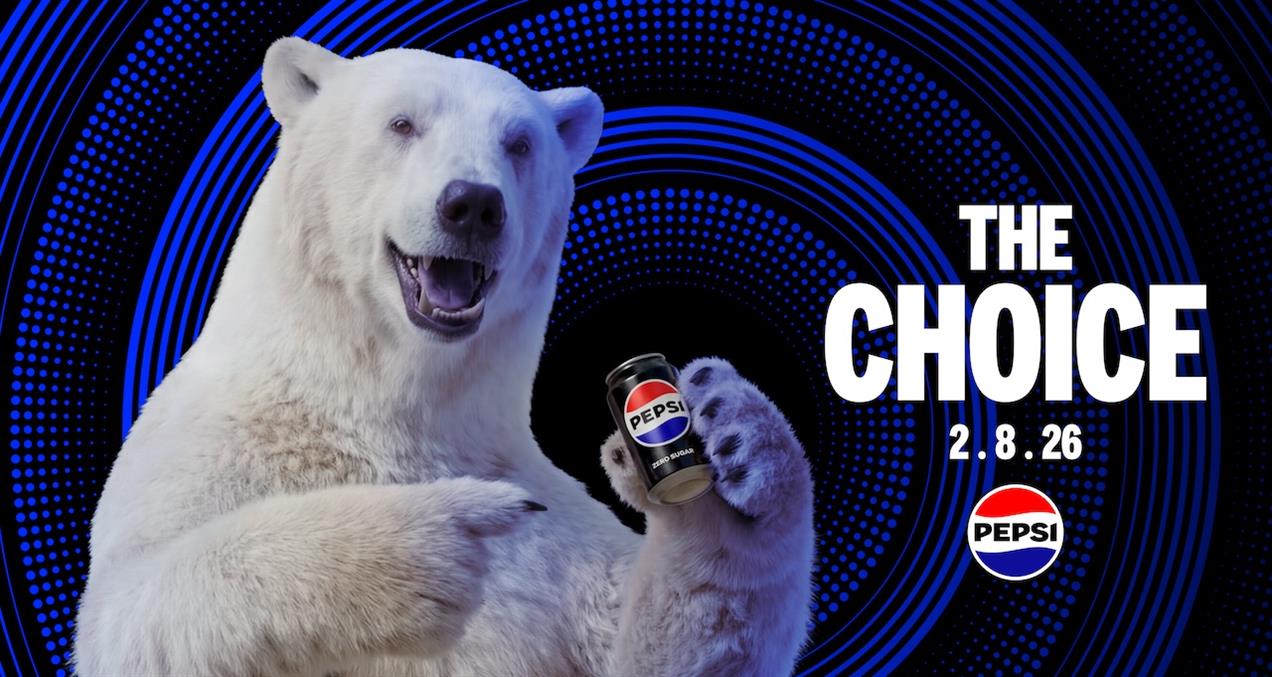
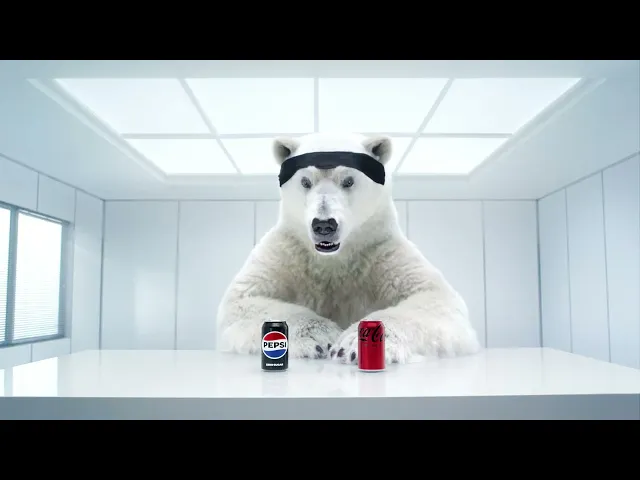
When Pepsi put Coca-Cola’s polar bear in a blind taste test, it wasn’t just a joke or a jab. It was a strategic gamble. One brand’s most valuable emotional asset, temporarily loaned to its biggest rival, on the biggest advertising stage in the world: the Super Bowl.
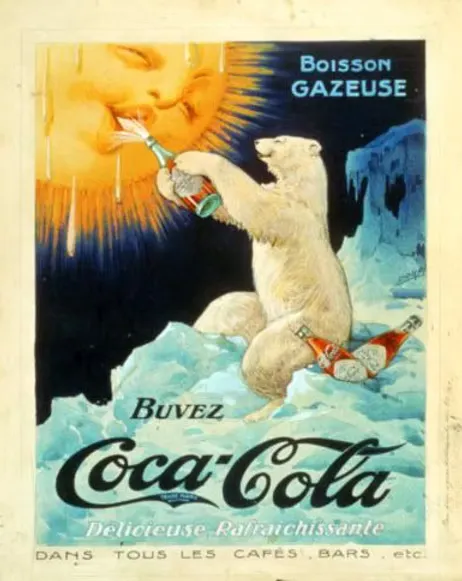
The polar bear isn’t just a character. Coca-Cola has been using the bear in its advertising since 1922 to stand in for warmth, tradition, and the idea of “the classic cola.”
No need to explain or reintroduce. The bear just shows up, and the meaning is already there. That’s brand equity, and Coke has been patiently building it for over a century.
The joke in the Pepsi commercial lands instantly because we already know what the bear is supposed to like better.
The reveal works in a single beat because Coke has spent decades teaching us to associate their brand with the iconic character.
That’s the tension at the center of this ad. Pepsi is spending equity it didn’t build to make its own story work faster.
The question isn’t whether it’s clever. It clearly is. The question is more uncomfortable, and more interesting: when Pepsi borrows Coke’s bear, whose brand actually gets stronger?
What exactly Pepsi is borrowing
The strength of this move comes from both the familiarity of the bear and the function it plays in Coca-Cola’s branding.
The polar bear works because it represents default behavior. It signals a default choice, a safe option, an inherited habit.
When the bear appears, viewers aren’t deciding what it drinks. They already know. The bear is the physical brand asset, but that assumption is the emotional asset that comes with it.
That’s the brand equity that Coke has built over decades. It’s not just about nostalgia or familiarity. It’s incumbency. Coke is the cola you drink by tradition not by persuasion.
By placing the bear in their ad, Pepsi borrows the viewers’ default assumption and flips it on its head.
That’s why the reveal lands so quickly. Pepsi doesn’t need to establish the context. Coke has already done that work over decades. The bear brings the assumption with it, and Pepsi exploits it.
This is borrowed equity at its most efficient. And that efficiency is exactly what makes the strategy powerful. It’s also what makes it fragile.
How the ad feeds Pepsi’s own system
Don’t be fooled. This is NOT a case of stolen identity. The hook might be borrowed, but the story is unmistakably Pepsi’s.
The entire premise of the story in this ad is built on Pepsi’s longstanding marketing promotion: the Pepsi Challenge.
The Pepsi Challenge started in the mid-1970s. It functions like a taste test and is administered by a Pepsi rep in shopping centers and other public places. Labels are removed so the taste testers don’t know which cola is which.
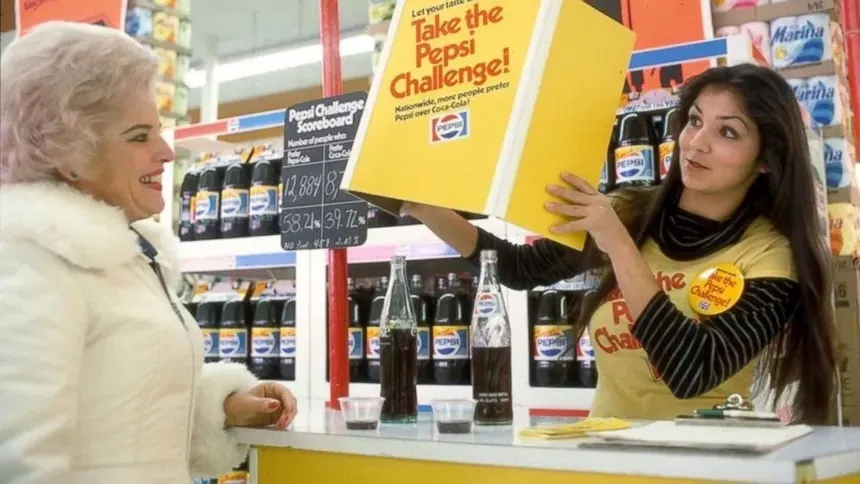
It’s centered on the idea that what you assume you prefer doesn’t always hold up with what you experience. This has been core to Pepsi’s brand identity for decades.
Visually and tonally, the ad stays disciplined. The frame is mainly dominated by blue, with the product treated as the object of desire, not an afterthought.
The pacing is expert: not too fast, not too slow. It’s self-aware. Even the music choice, Queen’s “I Want to Break Free,” reinforces the same idea that’s core to the brand identity: breaking from the default and choosing flavor over habit.
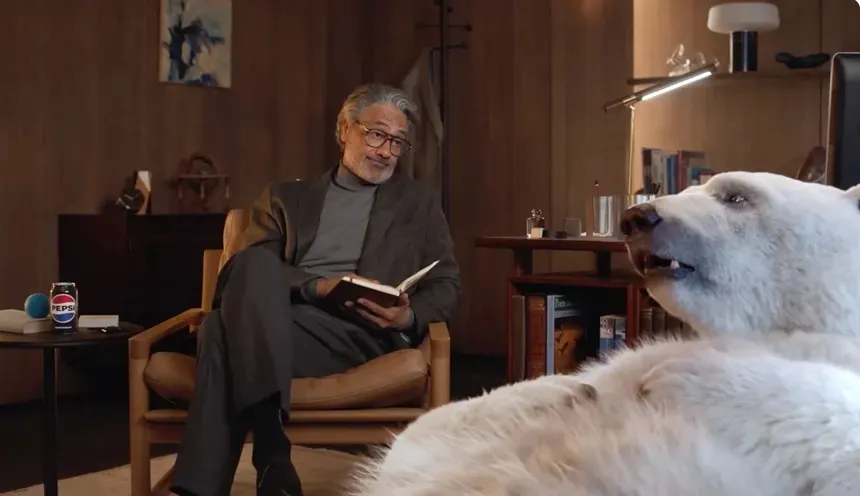
The polar bear’s arc matters here too. It’s important to note, the ad isn’t setting the bear up to betray Coke, rather it discovered something new.
The character’s identity crisis dramatizes Pepsi’s long-standing positioning as the brand for people willing to question inherited choices.
This distinction is important!
Pepsi isn’t claiming to be cooler or louder; they’re simply saying, “you like us more thank you think you do.”
The borrowed equity opens the door, but the message in the room is definitely Pepsi’s.
The strategic risk: reinforcing Coke as the reference point
When brands define themselves based on a rival’s most iconic asset, it risks quietly reinforcing that rival as the foundation of that industry.
The bear in this scenario carries status, and it signals who sets the foundation for what cola is supposed to be.
Even if Pepsi wins the story here, Coca-Cola, still occupies the role of the default or classic cola. The ad depends on that hierarchy to function. If Coke wasn’t assumed to be the bear’s preferred drink, then the reveal in the ad wouldn’t mean anything.
For casual soda drinkers that don’t find themselves on one side of the cola wars, the takeaway might simply be a reminder that Coke has a beloved character with deep cultural roots and Pepsi just took it for a joy ride.
There’s also the issue of longevity. Borrowed equity is inherently temporary. Pepsi doesn’t own the bear, which means anything they do with it is only a temporary win.
Coke can reclaim that asset instantly with its own campaign, restoring the bear to its original emotional territory and overwriting Pepsi’s moment.
Within a day or two of the ad being released I saw AI-generated content of a supposed Coke response. As of Sunday morning (February 8, 2026), there hasn’t been an official response.
The fake response campaign shows the polar bear waking to an alarm, wandering into the kitchen, and opening a fridge filled with Coke cans. Relief washes over the moment. Across the screen reads, “It was all a dream.”

We’ll see what happens, whether Coke responds or not. I imagine they will with something cheeky.
This is the tradeoff. High leverage in the short term, limited ownership in the long term. Pepsi wins attention now, but Coke retains control of the myth. The ad works precisely because it leans on that imbalance, and that’s what makes it risky as a repeatable strategy.
The lesson for brand design and positioning
I love this ad for a few reasons:
I was genuinely entertained when I first watched it.
I’m addicted to cola (Coke or Pepsi, count me in).
The storytelling, the visuals, the music, the vibes… *chef kiss*
Most importantly, this is an excellent case study in how brand equity actually works.
For industry or category leaders, the lesson is a little uncomfy. If you build assets that become cultural infrastructure, your competitors will eventually use them.
Your characters, products, colors, etc. will slip out of your control once they’re deeply embedded into the fabric of popular culture. That makes it crucial for the system built around these assets to be just as strong if not stronger.
The packaging, the product experience, and the consistency are what allow Coca-Cola to reclaim the bear so easily. The character is powerful because it’s supported everywhere else in the brand.
For competitors, the takeaway is a bit more strategic and tactical. Borrowed equity is a tool that can be used as a powerful accelerant, but only if it’s being used to reinforce your own brand story rather than replacing it.
No social climbing allowed. You can’t climb the equity ladder. You simply won’t survive.
Pepsi succeeds here not because it borrowed the bear, but because it wrapped that borrowed attention in Pepsi blue, Pepsi humor, and a familiar taste-first argument.
The ad doesn’t ask you to remember the bear. It asks you to reconsider your habit. They took the borrowed equity and used it to reinforce their own brand story.
The ultimate goal is to move from relative positioning (defined against a rival) to absolute positioning (a clear role and feeling in people’s lives), and brand design is one of the main levers in that shift.
It’s how borrowed moments either collapse into novelty or compound into something durable. Pepsi’s bear gamble shows both paths at once. Attention is easy to grab. Meaning has to be owned.
That’s the real distinction between borrowed equity and built equity. One gets you in the conversation. The other decides who people remember when the conversation moves on.
So, what do you think? Whose brand got stronger when Pepsi borrowed Coca-Cola’s polar bear?
More Articles
A collection of recent articles spanning brand strategy and positioning, brand design, and more.